I have 1,878 books in my Logos library. Commentaries, church fathers, reference works I bought over the years and mostly never got through, because doing it properly took hours I did not have on a Tuesday night.
I had a study on Psalm 91 half finished and sitting in a document. Not a blank page. A table of Hebrew words with some verses next to them, and a growing suspicion that I was onto something I could not yet defend.
The prompt
This is what I typed, word for word:
Use my Logos library and review the attached study I am working on, start in Dictionary of Demons and Deities and find references to support or change my position
The last five words are the whole thing. Support or change my position. I did not ask it to help me prove what I already thought. I asked it to go and find out whether I was wrong.
That is the difference between research and flattery, and it is the only reason I trust any of what comes back. An AI told to support your argument will always find a way. One told it may overturn you has to actually read something.
What I give it
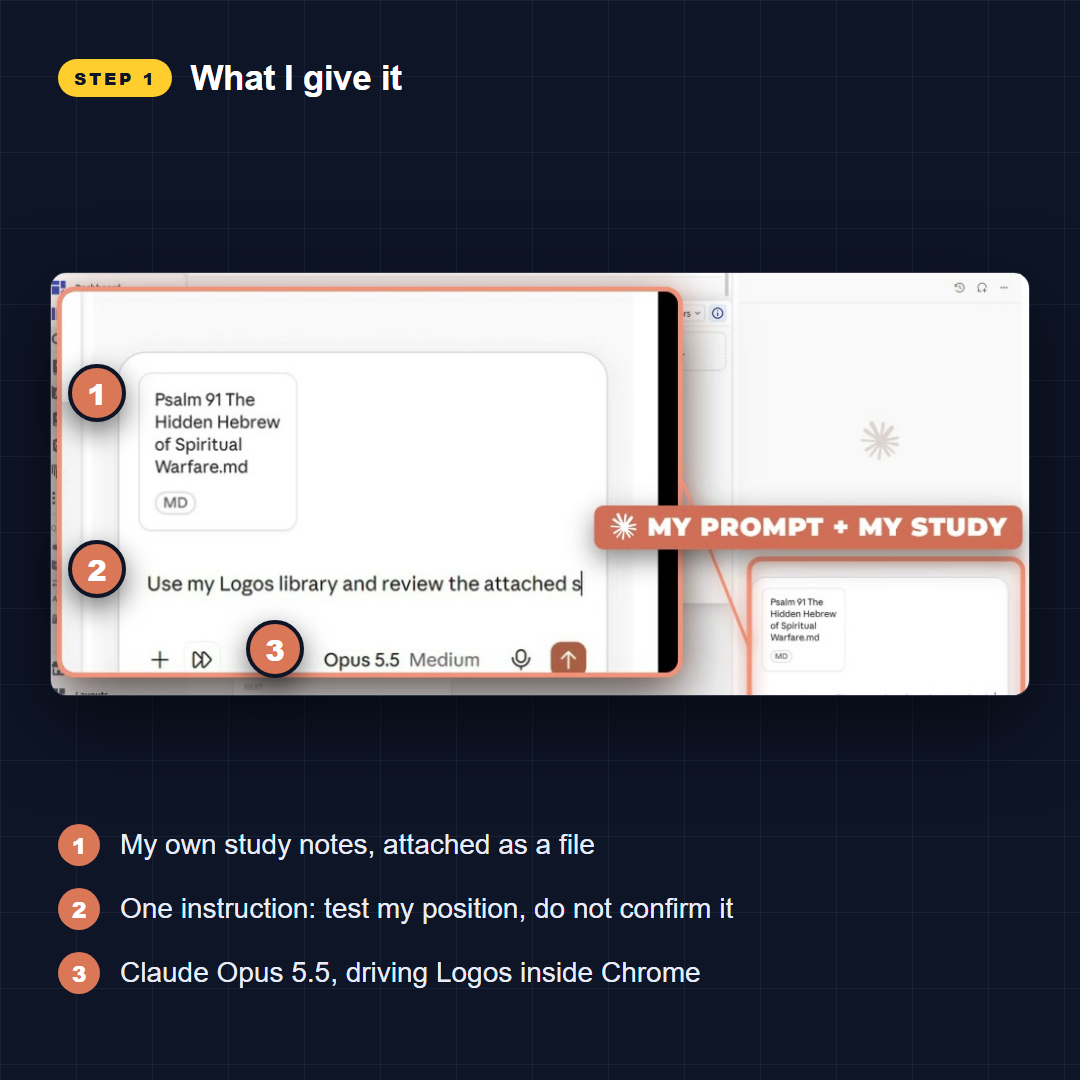
My own half finished study as an attachment, and that one line. Nothing else. There is no plugin, no connector and nothing wired into Logos. Claude runs in Chrome, looks at the screen the way I do, and clicks.
It went and checked
It opened the Dictionary of Deities and Demons in the Bible first, because that is where I sent it, and read the entry on Deber properly, including the bit about what the older translations flatten out.
Then it did the thing I did not expect. It came back and told me there were two more books in my library it thought I should look at, Demons: What the Bible Really Says and Demons and Spirits in Biblical Theology, and asked whether it should go into those too. It did not just wander off into my shelves. It asked, I said yes, and it went.
That is a research pass, and it is a separate job from writing anything up. Only after it was done did I hand the findings back along with my document and ask for the guide.
What it told me I had wrong
Then the review came back, and the longest section in it was headed What I’d change. Seven numbered items, every one a place where my own books did not say what I had written.
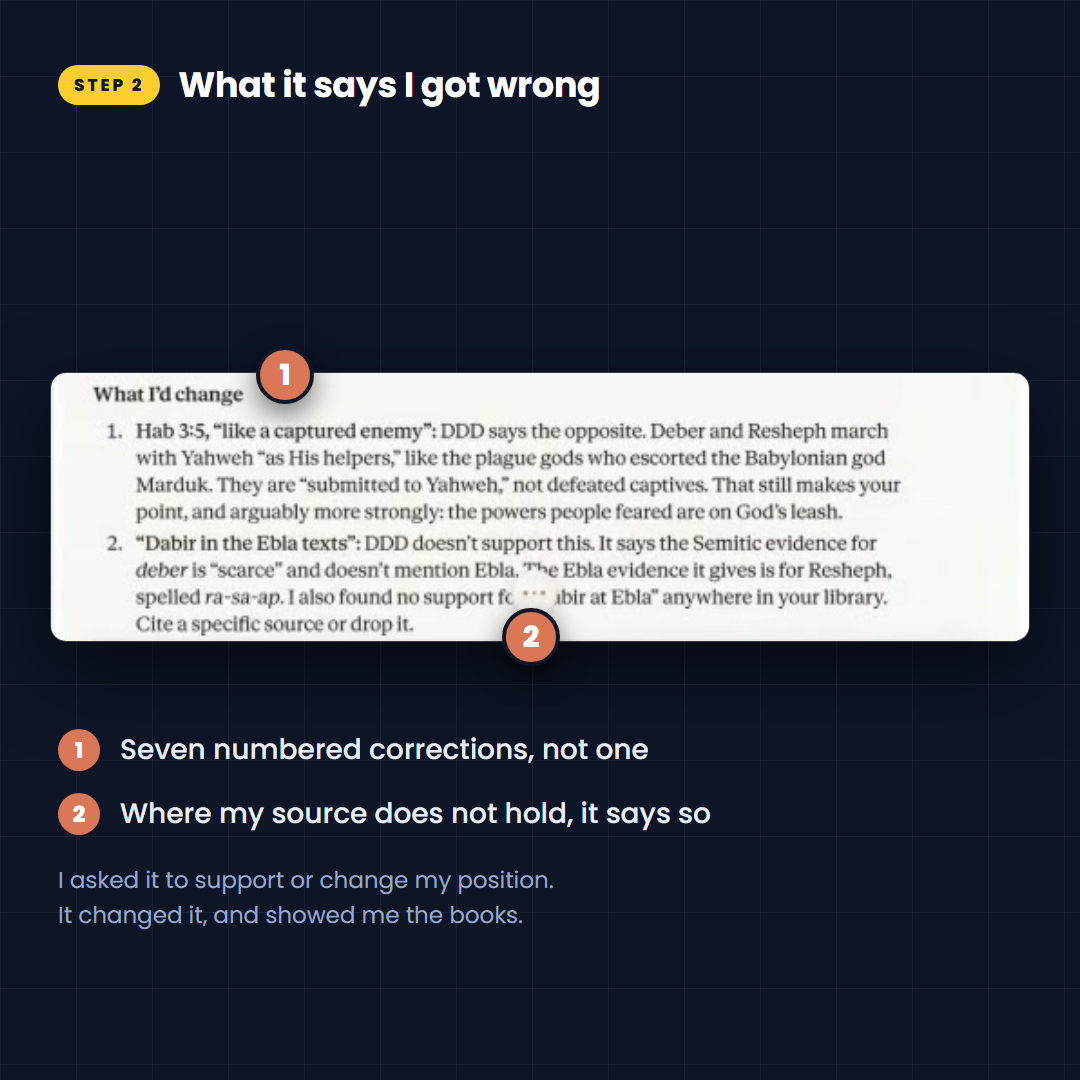
The first went straight at the central claim. I had read Habakkuk 3:5 as Deber and Resheph being dragged along behind God like captured enemies. The dictionary says the opposite. They march with Yahweh as his helpers, the way the plague gods escorted Marduk. Submitted, not defeated. Then it added the part that actually matters: that still makes your point, and arguably more strongly, because the powers people feared are on God’s leash.
Elsewhere I had written that Deber turns up in the Ebla texts. It checked and told me the dictionary does not say that. The Ebla evidence is for Resheph, not Deber, and it could find no support for the claim anywhere else on my shelves either. Cite a specific source or drop it.
It did the same to a table I had built lining the six up against the hours of the day. Wyatt gives two different pairings and neither one is mine, so present yours as one reading among several.
On Nega it was blunt. No entry in the dictionary, and the Talmud’s name for the psalm comes from a different Hebrew root, so the Talmud did not name the psalm after Nega at all. In its words, the weakest of your six.
That is what the last five words of the prompt bought. Not seven compliments. Seven corrections, each one with the citation attached so I could go and check it.
What comes back
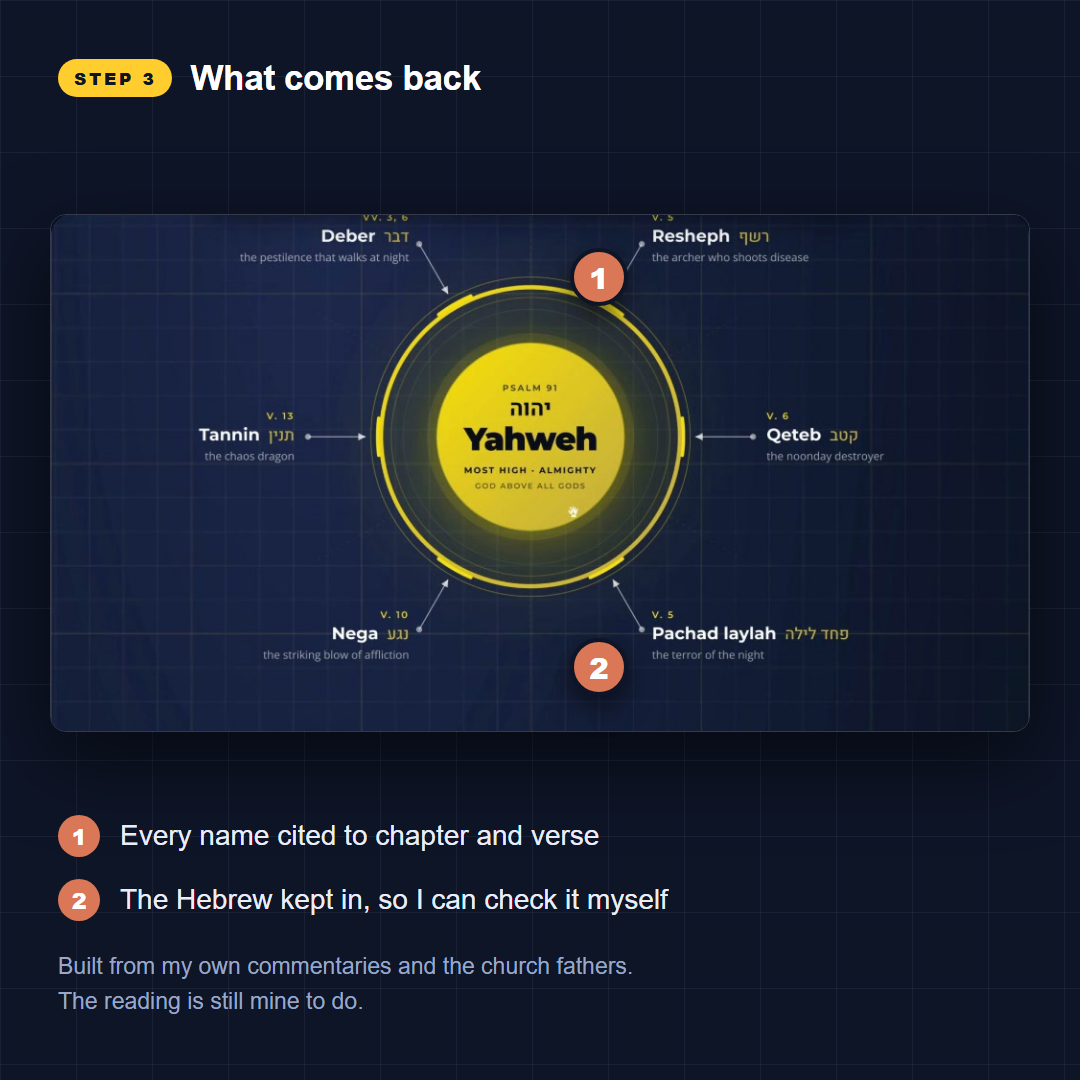
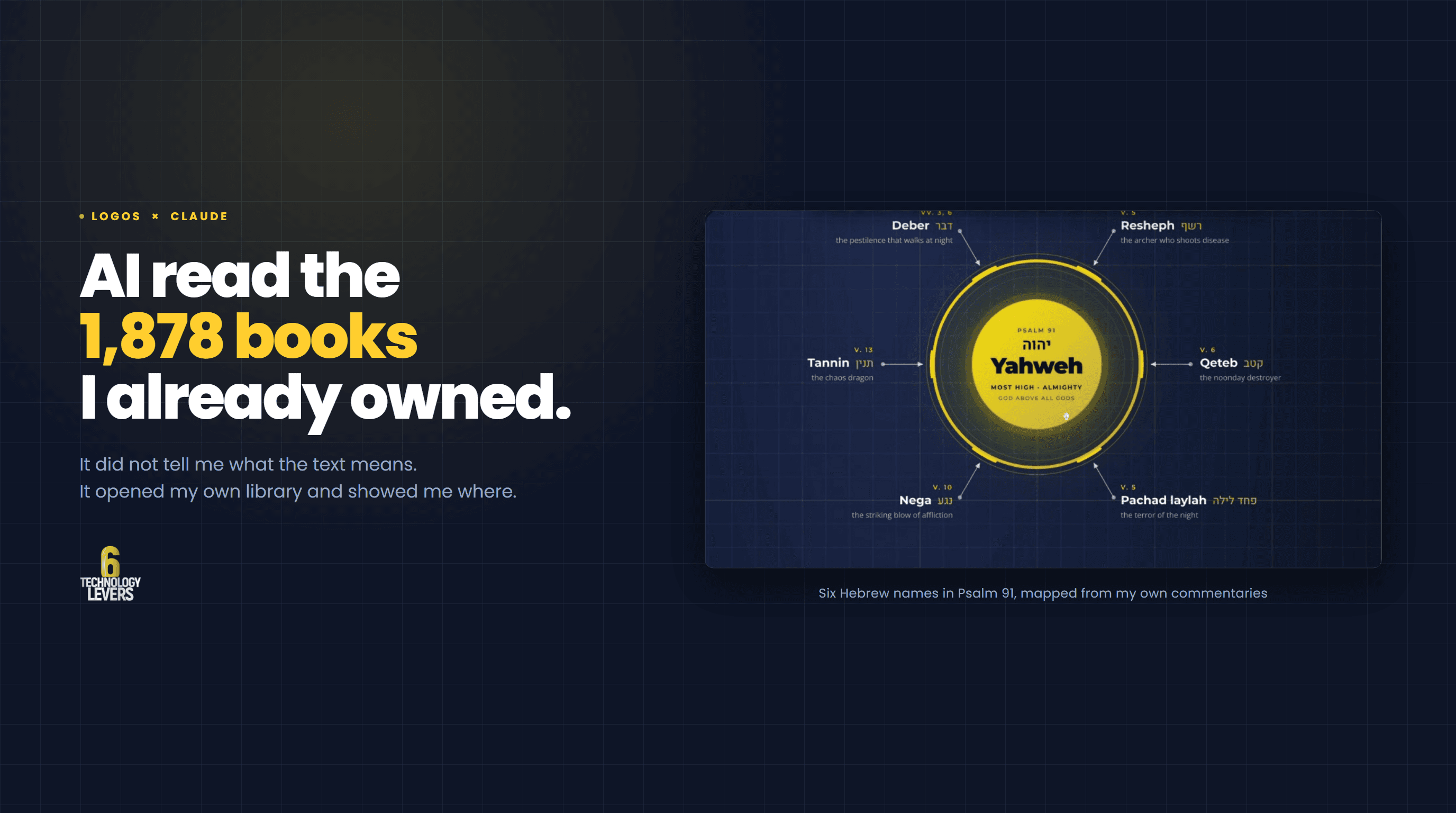
Six Hebrew names running through the psalm, each one cited to chapter and verse, with the Hebrew left in so I could check every line against the text myself. Deber, the pestilence that walks at night. Resheph, the archer who shoots disease. Qeteb, the noonday destroyer.
Read together they make a case I had suspected but could not yet support: that Psalm 91 is a warfare psalm, and the thing it keeps naming is not bad luck.
Every one of those came out of books already sitting on my shelf. I had owned the answer for years. What I did not have was the three hours.
Where I stop
This is the objection every serious student of Scripture will raise, and they are right to raise it, so here is the answer plainly.
Use it to find the sources. Never to skip them. The AI did not interpret a verse here. It read what my commentaries said, told me where, and put the right books in front of me faster than I could have found them. The reading is still mine to do. So are the conclusions, which is exactly why I told it to try to change them.
Get the Psalm 91 study guide
This is the guide that came out of it, with the primary texts listed at the foot so you can go and check the work rather than take my word for it.
Download the Psalm 91 study guide (PDF)
This is not really about Bible study
Swap the commentaries for your policy manuals, your contracts, your board minutes or fifteen years of case files, and nothing about the method changes. Most organisations I sit with are in the same position I was: they already own the answer, filed somewhere nobody has the hours to go through.
The useful move is the same one. Point it at your own documents, tell it to challenge the conclusion rather than decorate it, and make it show you where it got everything.